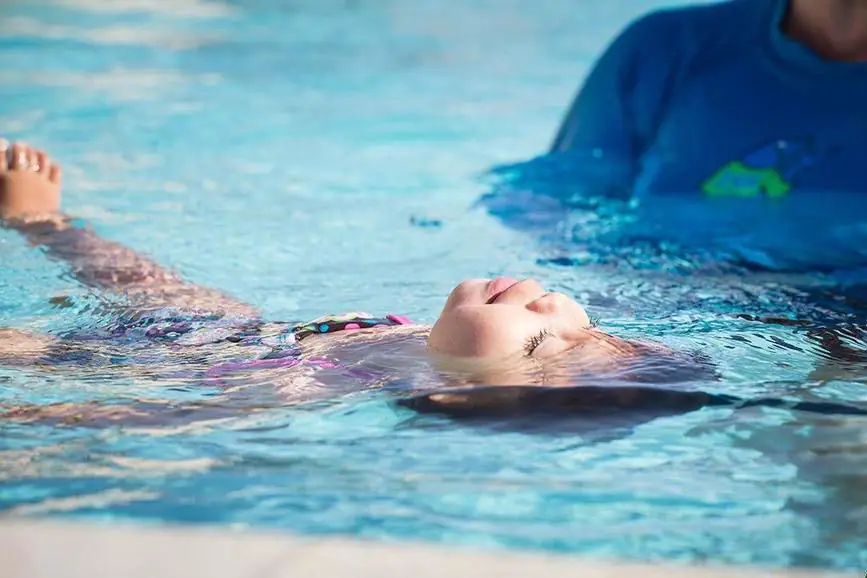
6 to 12 months
Rollback to Float
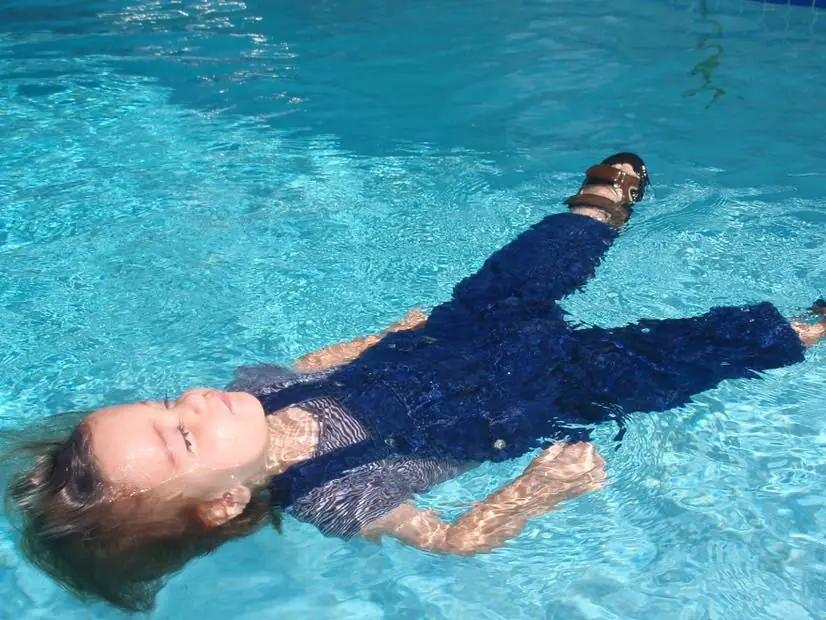
A baby learns to roll onto their back to float, rest and breathe, and to hold that position until help arrives.
ISR Self-Rescue, taught one-on-one by Glare Sanchez, ISR Certified. Ten minutes a day, Monday through Friday, for 4 to 6 weeks, from six months old to six years.
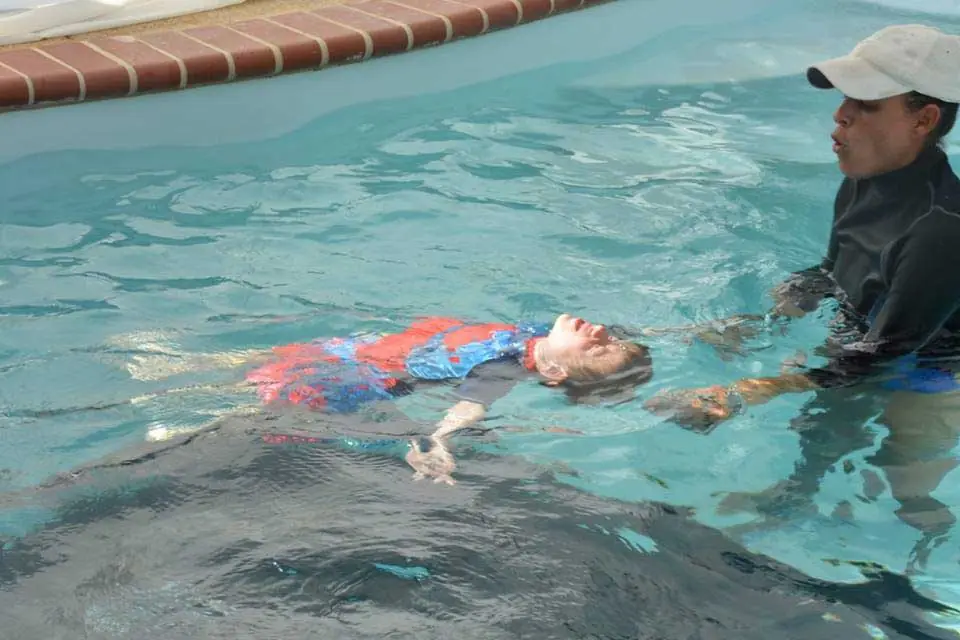
The ISR Self-Rescue sequence
ISR is drowning prevention, not a splash class. Every ten-minute lesson rehearses one route: what a child does if they end up in the water alone, from the first stroke to the hands on the edge.
Fall in
The moment that matters: an unplanned trip into the water, often fully clothed.
Swim, head down
A few strokes face down toward the side, the way the lessons drill it.
Roll to the back
When air runs short, the child rolls face up on their own.
Float, rest, breathe
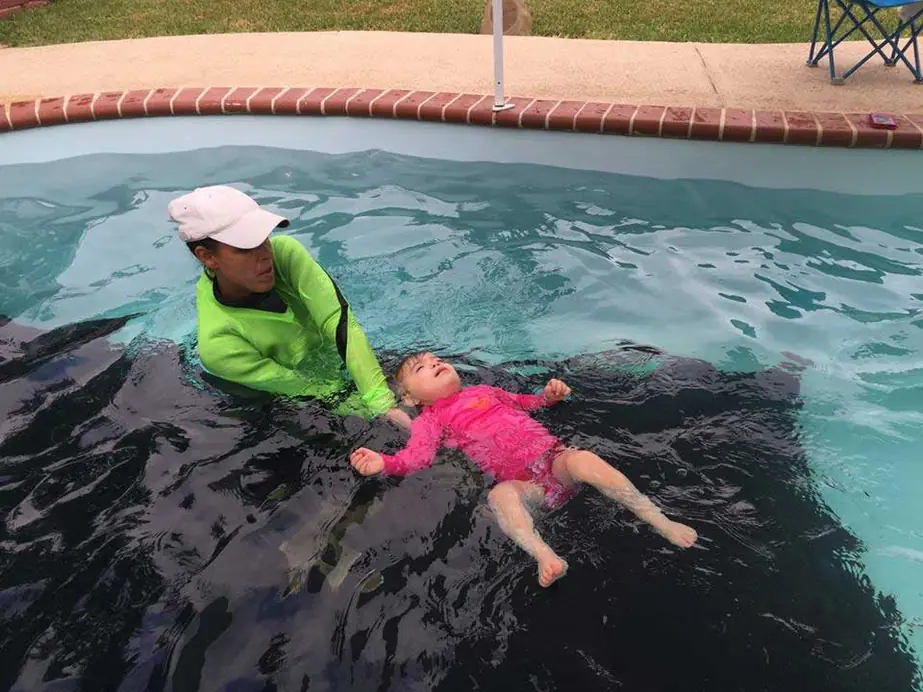
Held on the back at the surface for as long as it takes.
Roll over, swim on
Back onto the front and on toward the edge, in a repeat of the sequence.
Reach the side
Hands on the coping and crawl out, or stay floating until rescued.
10 min
Five days a week for 4 to 6 weeks, one child and one instructor in the water. Short, daily and consistent is the whole method.
It depends on the age. ISR teaches each stage the one skill that keeps that child's face out of the water, then layers the rest on top.
6 to 12 months
A baby learns to roll onto their back to float, rest and breathe, and to hold that position until help arrives.
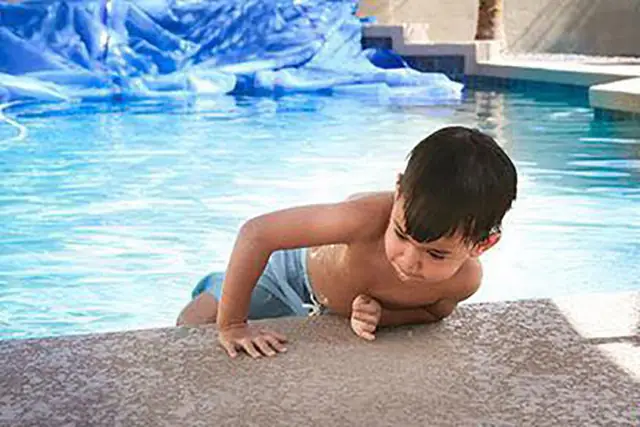
1 to 6 years
Swim head down, roll to float and breathe, roll back over and swim on until they reach the side and crawl out.
$35 ISR fee
Skills have to grow with a growing body. Refresher classes keep the float and the swim sequence current, season to season.
Coach Glare Sanchez
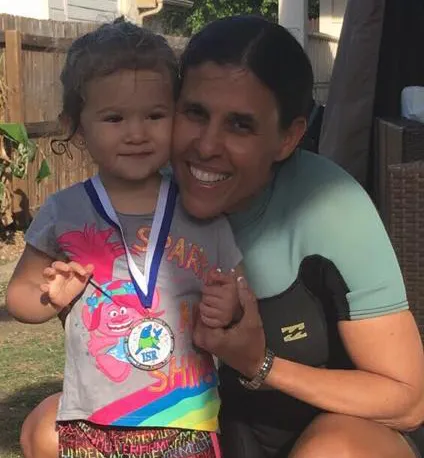
Glare grew up on the Caribbean island of Puerto Rico, swimming, surfing, windsurfing, water skiing and boating. For islanders, she says, learning to swim young is imperative. She graduated as an engineer, then stayed home when her son, Noah, was born, and first met ISR when she took him through it at the age of one.
She became a swimming teacher, then a certified ISR Instructor. Her goal is simple: to give moms an additional layer of security by equipping their young ones with water survival skills.
Glare's story1
Noah's age when Glare first took him through ISR herself.

5.0
Google rating across 8 reviews of Infant Swim San Antonio.
Kate, two summers running
“Absolutely love Coach Glare! Kate took lessons with her last summer and this summer. She has a way with the kids.”
Kristen, ISR Client · isrsanantonio.com
A little longer than six weeks
“Mrs. Sanchez is amazing! It took my child a little longer than the 6 weeks but Mrs Sanchez was patient and motivated to have my child truly comfortable and confident swimming. She doesn't teach for the money, but teaches a life skill of swimming, and wants to keep our children safe.”
Lindsay Valle · Google review
Isabella
“Glare is the best coach in the world! She is kind patient fun and just has the greatest attitude! She made me feel so safe and calm, and she connected with my daughter Isabella on another level!”
Erika, ISR Client · isrsanantonio.com
Back every season
“Glare is simply amazing. My son put up a fight at first but she was so patient and knew exactly how to get him to trust her. We continue to come every season!”
G DB · Google review
Twelve questions
That one, and the eleven other things parents ask Glare before the first lesson. Answers are from Infant Swimming Resource.
All parent questions
$105enrollment, new students
$35refresher classes
The enrollment fee is non-refundable and is paid to ISR, not to Glare, by PayPal, credit card or e-check, through the link in the email you get after signing up online. No slots open? Join the waitlist and you'll hear by email or text when one does.
Questions first? How sign up works, step by step