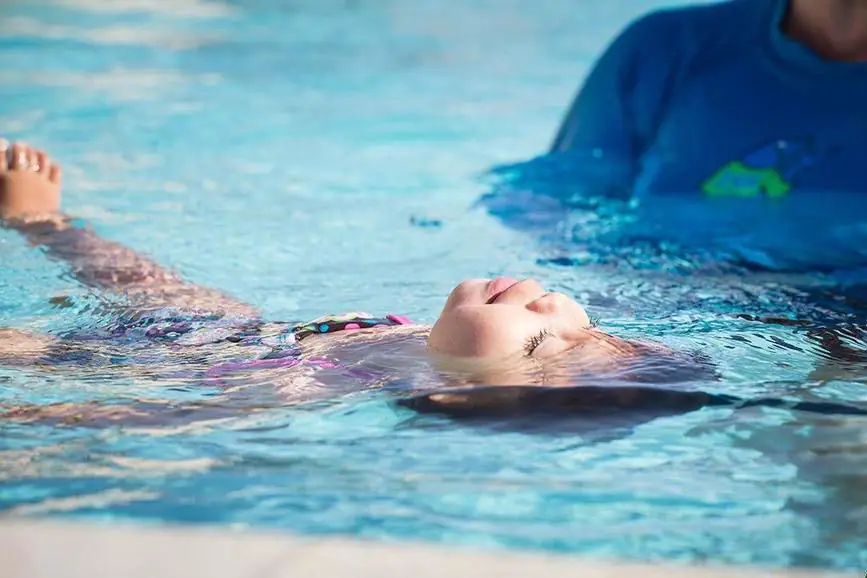
6 to 12
months
Rollback to Float
The baby learns to roll onto their back to float, rest and breathe, and to hold that position until help arrives. It is one job, practised until it is calm.
Rollback to Float in detailAbout ISR Self-Rescue
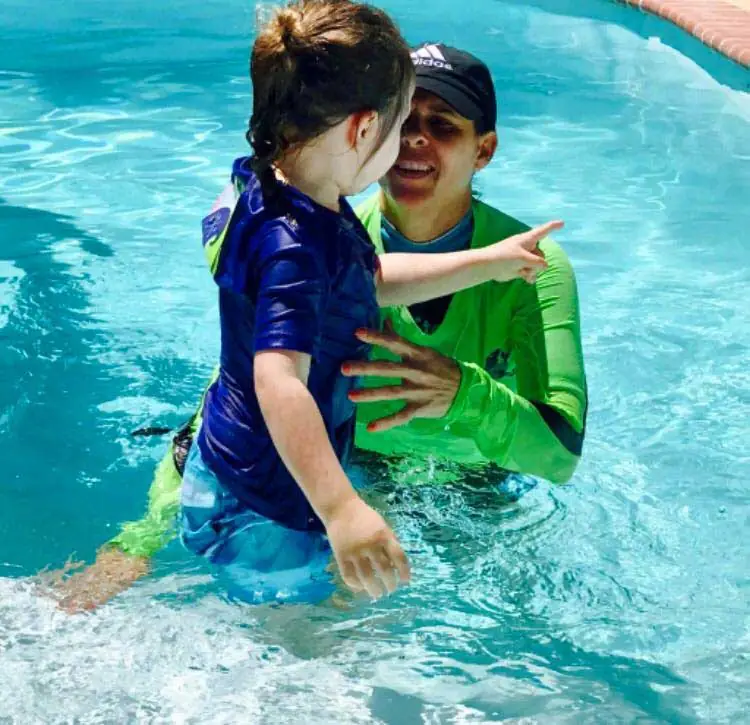
Infant Swimming Resource describes its lessons as a “4 to 6 weeks course, scheduled 5 days per week, Monday through Friday, for 10 minutes each day.” In Helotes, Coach Glare Sanchez teaches that format one-on-one, to babies from six months and children up to six years.
What ISR is
Not a splash class, and not a swim team in the making. The aim is a child who can look after themselves in the water until help arrives.
Founded in 1966, Infant Swimming Resource says ISR Self-Rescue is the product of decades of ongoing development in aquatic survival instruction for infants and children. ISR's stated focus is to teach a child to become a productive swimmer, or floater, in any depth of water, an “aquatic problem solver.”
Lessons are one-on-one with a certified instructor. ISR points to its emphasis on health, ongoing programme evaluations and parent education: a medical and developmental history is a mandatory part of the ISR national registration, held strictly confidential, and ISR says each child's health is monitored daily. Instructors attend a yearly re-certification symposium that includes quality control and continuing education, and parents get access to the Parent Resource Guide by Dr. Harvey Barnett and JoAnn Barnett.
ISR also says it teaches through the behavioral sciences, child development and sensorimotor learning, honoring each child's individual strengths and experiences. A baby does not need to be afraid to respond: if they have learned to roll over and float when they need air, they need skill, practice and confidence, not fear.
Infant Swimming Resource cites over 4,000 drowning deaths per year, and that number is the reason the programme exists.
Children under six months are not taught: ISR says they are not neurologically mature enough to benefit from instruction. For everyone else, the answer to “when do we start?” is on the parent questions page.
The two skills
6 to 12
months
The baby learns to roll onto their back to float, rest and breathe, and to hold that position until help arrives. It is one job, practised until it is calm.
Rollback to Float in detail1 to 6
years
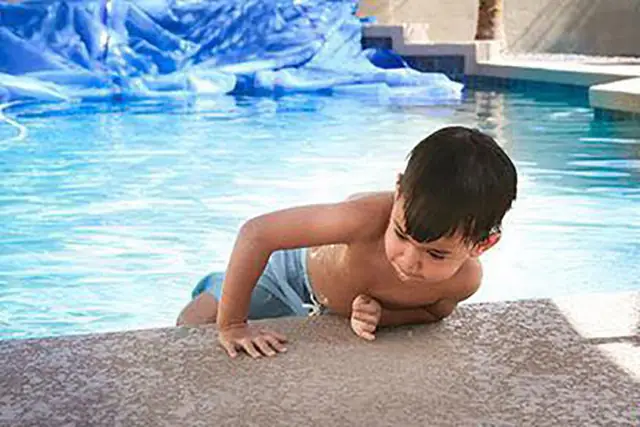
Children who can move learn a sequence they can run on their own, and ISR describes it in four beats.
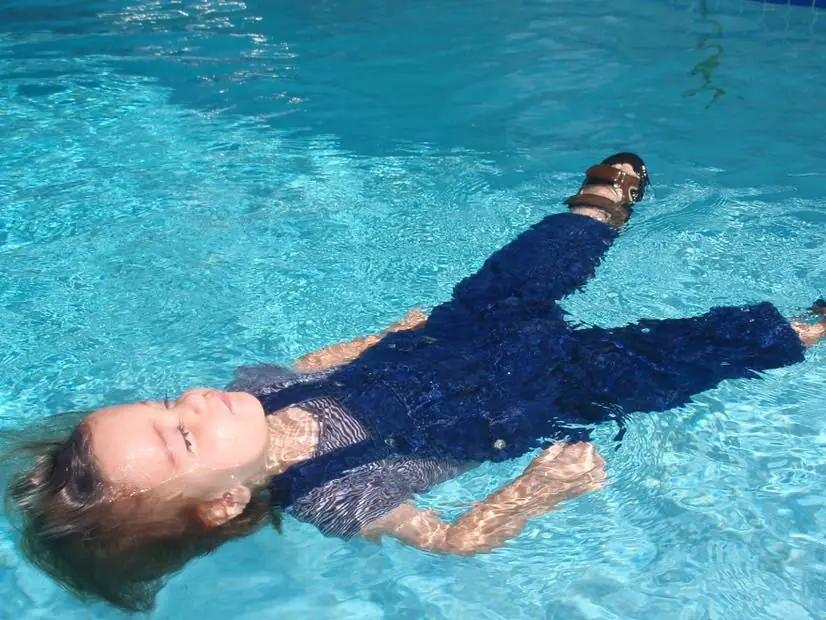
Practised in clothes
In ISR's words: once the children are fully skilled they will practice ISR's survival techniques fully clothed during lessons.
ISR also recommends refresher lessons, so a child's in-water skill level grows with their physical development.
What a week looks like
Each weekday a child gets ten focused minutes in the water. Over four to six weeks that adds up to a skill set a child can use on their own. Some children take a little longer than six weeks, and that is fine: one parent wrote that Glare stayed patient until her child was truly comfortable and confident.
Parents stay on the deck.
ISR says it does not want a baby to first link the water with a parent's attention and affection, and that teaching an emergency response takes a concentration and objectivity parents often find too hard to keep with their own child.
10 min
Then again next week, for four to six weeks. Expect some fussing in the first few lessons: ISR says it fades as the child grows more confident.
One layer of several
ISR is clear that pool fences, supervision and pool alarms matter too, as part of a multi-layered approach. Lessons add the child's own skills to the list. They do not replace the rest. It is the same thought behind Coach Glare's own goal, in her story: an additional layer of security.
ISR says flotation devices give children a false sense of security and hold them in postures that are not compatible with swimming skills. Life jackets must still be worn in a boat or around water where accidental submersion is possible. They are, in ISR's words, “not a substitute for the ability to swim or for adult supervision.”
ISR points to Dr. David Carr, a pediatrician in Orlando, Florida, who conducted an extensive study on the programme. After completing it, Dr. Carr and his wife enrolled their daughter in ISR lessons.
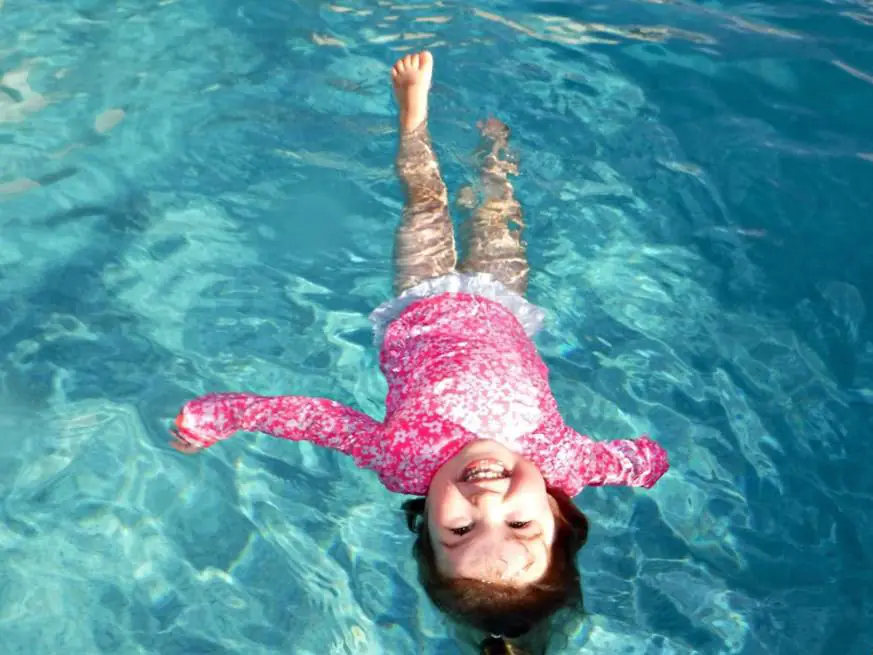
Refresher lessons are recommended as a child grows. ISR claims a retention rate of 94-100% up to one year following lessons, and adds a caution: children explore, and habits like floating in a bathtub or playing on the steps can interfere. Staying in touch with your instructor, and returning in good time, keeps the skills current. Refresher classes carry a $35 ISR enrollment fee, and several parents write that they come back each season. The details are on the refresher lessons page.
Registration runs through ISR's online sign-up, and there is a waitlist when slots are full. Prefer to talk first? Call Glare, or read how sign-up works step by step.