Swim-Float-Swim explained for parents
How ISR teaches children from 1 to 6 years to swim, roll to float, rest and swim again, one step at a time.
October 17, 2026 · 3 min read
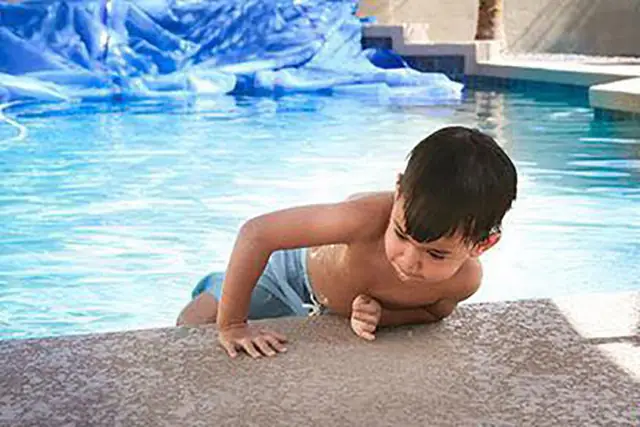
Babies learn to roll over and float. Once a child is a year old or older, Infant Swimming Resource (ISR) teaches a longer sequence it calls Swim-Float-Swim. The name tells you most of it. Here it is in plain terms, so the first time you watch a lesson from the side, you know what you're seeing.
The sequence, step by step
As ISR describes it, a child between 1 and 6 years learns to swim with the head down, roll onto the back to float, rest and breathe, and then roll back over to resume swimming. The child repeats that until reaching the side of the pool, where they can crawl out, or until they're rescued.
- Swim with the head down.
- When air is needed, roll onto the back and float.
- Rest and breathe on the back.
- Roll back over and swim again.
- Repeat until the side of the pool, then crawl out. Or keep floating until an adult comes.
Think of it as swim, breathe, swim, breathe, with the float as the breathing break. It isn't a trick for show. It's how a small child gets air when she can't yet swim far enough in one go.
Why the face goes down
Parents sometimes expect to see a young child paddling with her head up, the way a puppy does. ISR's sequence puts the breathing in the float instead. The child swims with her face down, then rolls over to breathe. That's the same idea babies learn in Rollback to Float, grown into something that moves.
ISR says its goal is for a child to become a productive swimmer or floater in any depth of water, an “aquatic problem solver” in its words. That phrase is worth holding on to. The aim isn't a pretty stroke. It's a child who can work out what to do when she's in the water and wasn't expecting to be.
What changes once a child is skilled
Once a child is fully skilled, ISR has her practice the techniques fully clothed during lessons. The logic is easy to follow. Children don't fall into water wearing a swimsuit on purpose. Wet clothes feel different, and practicing in them means the skill has been tried in something closer to what a child might actually be wearing.
Refresher lessons are recommended as the child grows. We cover those in another post, along with what can get in the way of the skills between seasons.
What you'll see from the side
Because parents stay out of the water, you'll be watching from the pool's edge while Coach Glare works one-on-one with your child. Lessons are 10 minutes, Monday through Friday, for 4 to 6 weeks. Early on, your child may fuss. ISR says that's common in the first few lessons and eases as the child gets more confident.
ISR also says that once children are competent, many can't be dragged away from the pool because they're having too much fun. Its phrasing is that fun is when skill meets challenge. That's ISR's description, not a guarantee, but it tells you what the program is aiming for: a child who enjoys the water, not one who just puts up with it.
One ISR parent wrote on Glare's site about the change at home: “Going to the pool used to be terrifying to me but now we can relax and have fun.” Another, Shonda S., described Glare's swim environment as “safe but still feels warm and inviting.”
Questions parents ask before they start
Will my child be afraid of the water? ISR's answer is that there's a difference between being fearful and being apprehensive because you aren't yet skilled in a new environment. It calls ISR a drowning prevention program that teaches survival swimming, not traditional swim lessons, and compares it to sitting in a car seat: something a parent does for safety because it matters.
How long will it take? The course is 4 to 6 weeks, scheduled five days a week. Children are individuals, though, and you'll learn more from the instructor's daily feedback than from a number.
Have a child between 1 and 6? Call Coach Glare at (321) 662-3718 or sign up online. If registration is closed, join the waitlist, and you'll be contacted by email or text when a slot opens.
ISR San Antonio, (321) 662-3718
Call (321) 662-3718More articles
Why babies roll to float first
The first survival skill ISR teaches babies from 6 to 12 months isn't swimming at all. It's turning over and breathing.
What a ten-minute ISR lesson looks like
A short daily lesson, a parent on the pool deck and a few fussy first days: what to expect from ISR Self-Rescue in Helotes.