What a ten-minute ISR lesson looks like
A short daily lesson, a parent on the pool deck and a few fussy first days: what to expect from ISR Self-Rescue in Helotes.
October 17, 2026 · 3 min read
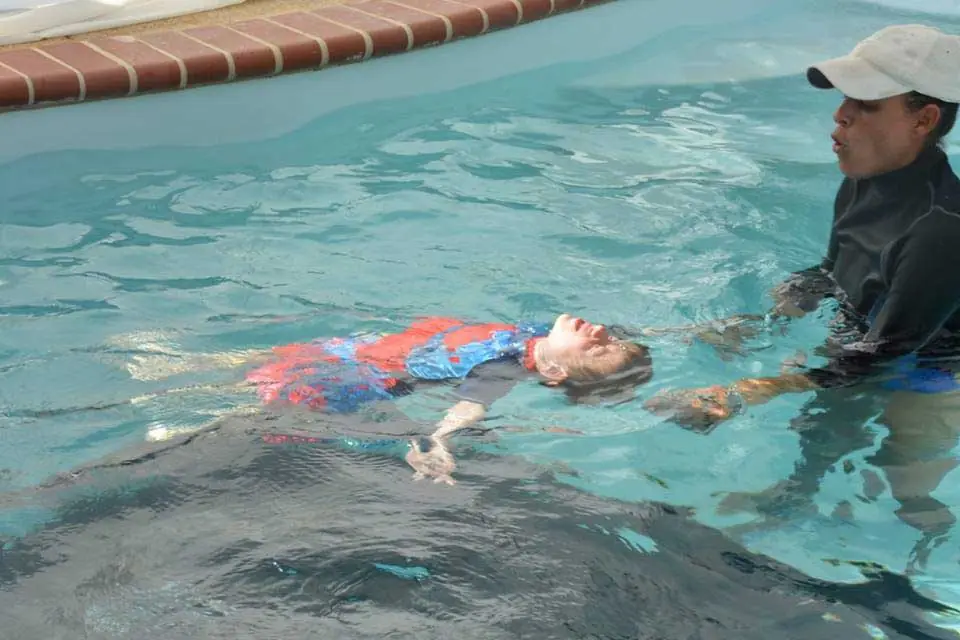
Ten minutes doesn't sound like much. Parents hear it and wonder whether anything real can happen in that time. Then they hear the rest: every weekday, for four to six weeks, one-on-one with a certified instructor. The shape of the program is the point, so it helps to know it before you sign up.
The schedule, plainly
ISR Self-Rescue lessons with Coach Glare Sanchez run 10 minutes a day, five days a week, Monday through Friday. A full course takes 4 to 6 weeks. Every lesson is one-on-one, so your child works directly with the instructor, not alongside a group of other kids.
Short and frequent is how ISR is built. Each day's lesson picks up from the day before, and your child practices the same skills again and again. ISR also describes ongoing program evaluations and parent education as part of the course, so the lesson isn't only the ten minutes in the water.
Be realistic about the calendar. Five days in a row for several weeks is a real commitment, and it's worth checking your own schedule before you register. Be realistic about the timeline too. A parent named Lindsay Valle wrote in a Google review that it “took my child a little longer than the 6 weeks,” and that Mrs. Sanchez stayed patient and kept working until her child was truly comfortable and confident swimming.
Why parents stay out of the water
Parents don't get in the pool during lessons. That surprises a lot of people, so here's the reasoning ISR gives. First, ISR doesn't want a baby to link the water, at the start, with a parent's love, attention and affection. Second, teaching a child to respond to an aquatic emergency takes a great deal of concentration and objectivity, and ISR says parents often find it too hard to be objective with their own children in the water.
You aren't shut out, though. ISR says your education in water safety is part of your child's lessons, and you get access to the Parent Resource Guide by Dr. Harvey Barnett and JoAnn Barnett. Communication matters too. George C. wrote on Glare's site that she is “excellent at communicating with us,” and that she goes out of her way to give their child personal attention.
Fussing in the first lessons
Expect some. ISR's FAQ says children often fuss during the first few lessons because they're in a new environment around new people, and that the fussing decreases as the child gains confidence in the water. ISR compares it to trying a new exercise class or being handed a task at work you've never done. It's hard until you get the hang of it.
A Google reviewer who goes by G DB put it this way: “My son put up a fight at first but she was so patient and knew exactly how to get him to trust her. We continue to come every season!”
A fussy start is expected, and you can ask Glare how your child is doing at any point. Nobody should be guessing from the pool deck.
What happens once your child is skilled
Once children are fully skilled, they practice the techniques fully clothed during lessons. Refresher lessons are recommended as the child grows. Both are covered in other posts here, but it helps to know now that the course doesn't stop at the first float.
Signing up
The sign-up page is worth a slow read before you commit. It lays out the lesson types and the fees, and it's where you find out whether registration is open or whether you'll be joining the waitlist. Read it first, then use the link in the email to register.
- Click Signup Online on the ISR San Antonio site and read all the instructions, lesson types and fees first.
- An automatically generated email arrives with your registration link.
- The enrollment fee is paid to ISR, not to the instructor: $105 for new students and $35 for refresher classes. It is non-refundable.
- You can pay by PayPal, credit card or e-check.
- If registration is closed or no slots are open, join the waitlist. You'll be contacted by email or text when a slot opens.
Your child's medical and developmental history is a mandatory part of ISR's national registration, and ISR says it's held strictly confidential. If you'd like to talk it through before you register, call Coach Glare at (321) 662-3718 or sign up online. If this season's slots are full, ask her about the waitlist.
ISR San Antonio, (321) 662-3718
Call (321) 662-3718More articles
Why babies roll to float first
The first survival skill ISR teaches babies from 6 to 12 months isn't swimming at all. It's turning over and breathing.
Swim-Float-Swim explained for parents
How ISR teaches children from 1 to 6 years to swim, roll to float, rest and swim again, one step at a time.